
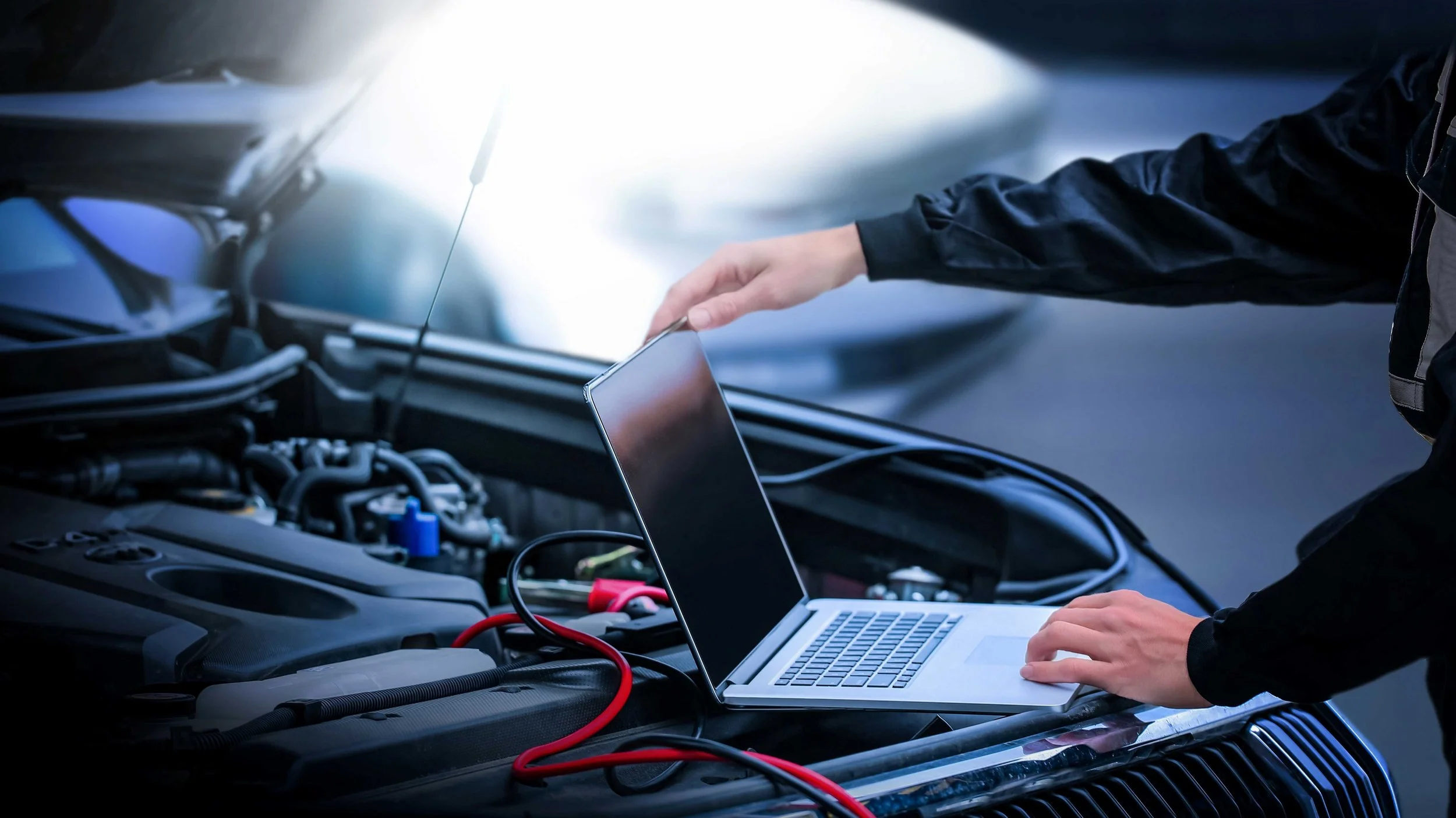
Check Engine Light On?
We find the cause, not just the code. Honest diagnostics
in south Edmonton since 1987.
Check Engine Light Diagnosis in Edmonton — Finding the Cause, Not Just the Code
A check engine light means the car's computer has recorded a fault. It does not tell you what is broken, how serious it is, or what it will cost — and neither does a free code scan. That gap is what a real diagnostic closes.
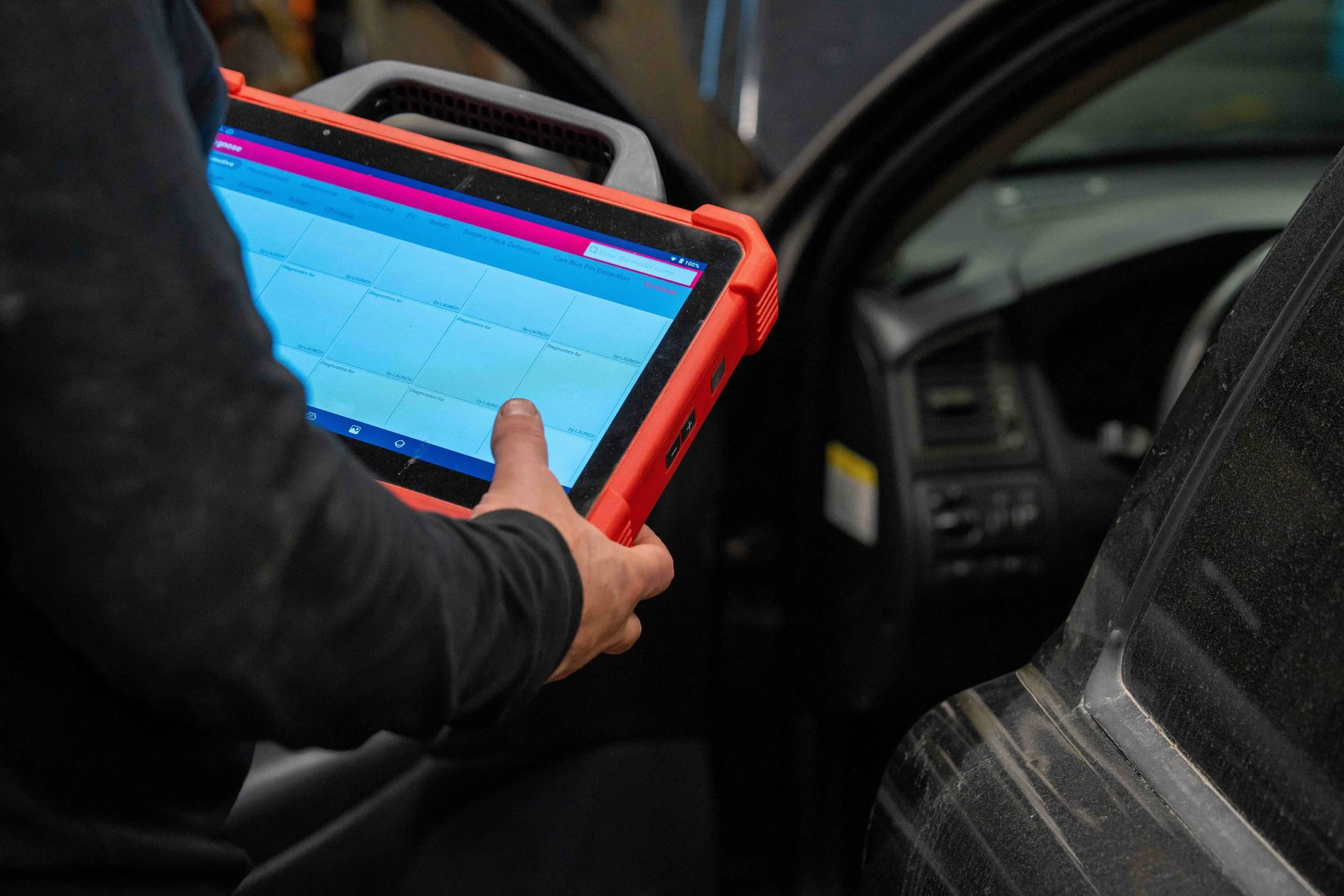
A & R Automotive has been diagnosing engine faults at 2687 96 Street NW since 1987. AMVIC licensed, AMA/CAA approved. Call 780-468-3052 and we will tell you honestly whether it is something to deal with today or something that can wait until your next oil change.
Is It Safe to Keep Driving?
A steady check engine light usually means keep an eye on it and get it looked at soon. A flashing check engine light means stop driving and call us.
The difference matters. A flashing light indicates an active misfire severe enough to dump raw fuel into the exhaust, which can destroy a catalytic converter in a short drive — turning a modest repair into an expensive one. If your light is flashing, do not finish the trip.
Other dash lights that mean stop rather than continue: oil pressure, engine temperature, and the battery or charging light. A steady check engine light on its own, with the car driving normally, is not an emergency.
What a Diagnostic Actually Costs
Our diagnostic fee is applied to the repair if you have us do the work.
We charge for it because it is real work. Reading the code takes ninety seconds; finding out why the code is there is what you are actually paying for, and on some faults that takes an hour with a scan tool, a multimeter and a wiring diagram. A shop that offers it free is either recovering the cost inside the repair price or is not really diagnosing — just reading a code and replacing the part it names.
If we cannot find the fault, we will tell you that too, and we will tell you what it would take to go further before you spend anything more.
The Free Scan at the Parts Store
Parts stores will read your code for free, and there is nothing wrong with taking them up on it. It is genuinely useful to know what the code is before you call anyone. We would rather you arrived informed.
What that scan cannot do is tell you the cause. A code names a circuit or a symptom the computer noticed — it does not name the failed component. P0420, one of the most common codes, does not mean "replace the catalytic converter." It means the computer measured a difference between two oxygen sensors that fell outside expected range, and the actual cause is often an upstream sensor, an exhaust leak ahead of the converter, or a misfire — all of which are cheaper to fix than a converter and all of which will set the same code.
The expensive version of this story is the person who reads a code, buys the part it names, fits it, and finds the light back on a week later. We see that regularly. Diagnosis is what prevents it.
Common Codes and What They Usually Mean
P0420 — Catalyst System Efficiency Below Threshold
The computer has compared the oxygen sensors either side of the catalytic converter and decided the converter is not doing its job. It is the single most-searched engine code in this market. It sometimes is the converter, but on a high-mileage vehicle it is at least as often a lazy downstream oxygen sensor, a small exhaust leak before the converter, or an ongoing misfire slowly killing it. Diagnosing which one before spending anything is the difference between a modest bill and a large one.
P0300 — Random or Multiple Cylinder Misfire
The engine is misfiring but the computer cannot isolate which cylinder. Common causes are worn spark plugs, failing ignition coils, a vacuum leak, or fuel delivery problems. If P0300 appears alongside a flashing light, stop driving — an active misfire is the fault most likely to cause expensive secondary damage.
P0301 through P0308 — Misfire on a Specific Cylinder
Same problem, but the computer has identified the cylinder, which narrows the diagnosis considerably. Usually a coil or plug on that cylinder, and often a straightforward repair.
P0171 and P0174 — System Too Lean
The engine is getting more air than the computer expects. Usually a vacuum leak, a dirty mass airflow sensor, or a failing fuel pump. Frequently accompanied by a rough idle.
These are the codes we see most, but there are thousands of them and the code is a starting point rather than an answer. Bring us the code if you have it — it saves time.
How We Diagnose
We pull the stored codes and the freeze-frame data, which records what the engine was doing at the moment the fault occurred — road speed, engine load, coolant temperature. That context often matters more than the code itself.
From there it depends on the fault. Live data on a scan tool to watch sensors behave in real time, a smoke test for vacuum and exhaust leaks, a multimeter on the circuit, a compression or leak-down test if the fault points at the engine itself. We work toward the cause rather than replacing parts until the light goes out.
Then you get a plain explanation of what we found, what it will cost, and whether it needs doing now. If the answer is that it can wait until spring, we will say so.
Why Have Us Do It
Diagnosis is the part of this trade where experience matters most and where it is easiest to be sold something you do not need. A shop that guesses passes the cost of guessing on to you in replaced parts.
We have been doing this in the same building since 1987, we are AMVIC licensed, and everything we fit carries the NAPA AutoPro nationwide parts and labour warranty. And because we are a full mechanical shop, whatever the diagnosis turns out to be — engine, brakes, suspension, tires — we can just fix it rather than sending you somewhere else to start again.
Common Questions
-
If it is steady and the car is driving normally, yes — but book it in. If it is flashing, no. Stop and call us.
-
Because the free scan reads the code and we find the cause. They are different jobs. Bring us the code by all means — it gives us a head start.
-
Sometimes. If the fault does not recur across a set number of drive cycles the computer will clear it. That does not mean the problem is gone, and if it returns it will usually keep returning.
-
We can, but we will not do it and pretend the problem is solved. Clearing a code before an out-of-province or commercial inspection also erases the readiness monitors, which will fail the inspection on its own.
-
Probably not. A loose or failed fuel cap is one of the most common causes of a check engine light, because it lets the evaporative emissions system leak. Tighten it, and if the light does not clear after a few days of driving, bring it in.
Get the Light Diagnosed
Call 780-468-3052 or come by 2687-96 Street NW in South Edmonton.
Open Monday to Friday, 8:00am to 6:00pm.
If you already know the code, have it with you — it saves us both time.