
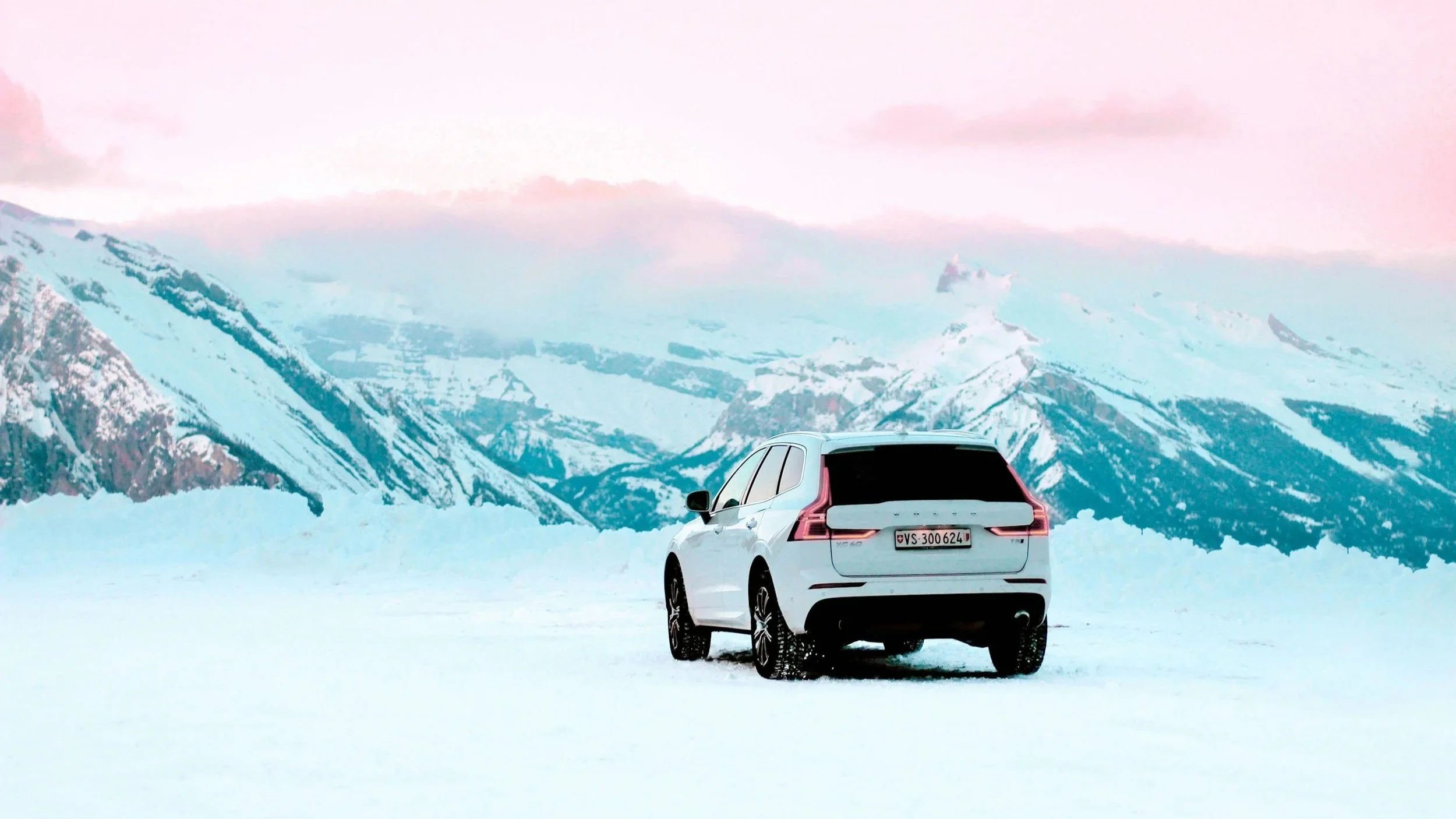
Get Ready for an Alberta Winter.
A $59.95 winter checkup — battery, block heater, coolant strength, tires, wipers and lights — before the first cold snap does the checking for you.
Winter Checkup in Edmonton — Get Ready for an Alberta Winter
$59.95 to check the systems your vehicle depends on at minus thirty: the battery and charging system, block heater, coolant strength, tires, wipers and washer, lights, belts and hoses, and the heater and defrost that keep you able to see. You get a written report, and anything that will not survive January flagged while it is still October.
Most of what strands people in an Edmonton winter is visible in the fall. A battery that starts the car at plus five and cannot at minus twenty-five. A block heater cord that has been frayed since March. Coolant that has been topped up with water until it protects to minus fifteen instead of minus forty. None of it announces itself in September, and all of it shows up in the first real cold snap — usually in a parking lot, usually after dark.
Call 780-468-3052 in late September or early October. If you are booking your winter tires on, say so and we will do both in one visit, before the rush.
What a Winter Checkup Covers
Every item is there because it is a thing that fails in the cold, or a thing you cannot do without when it does.
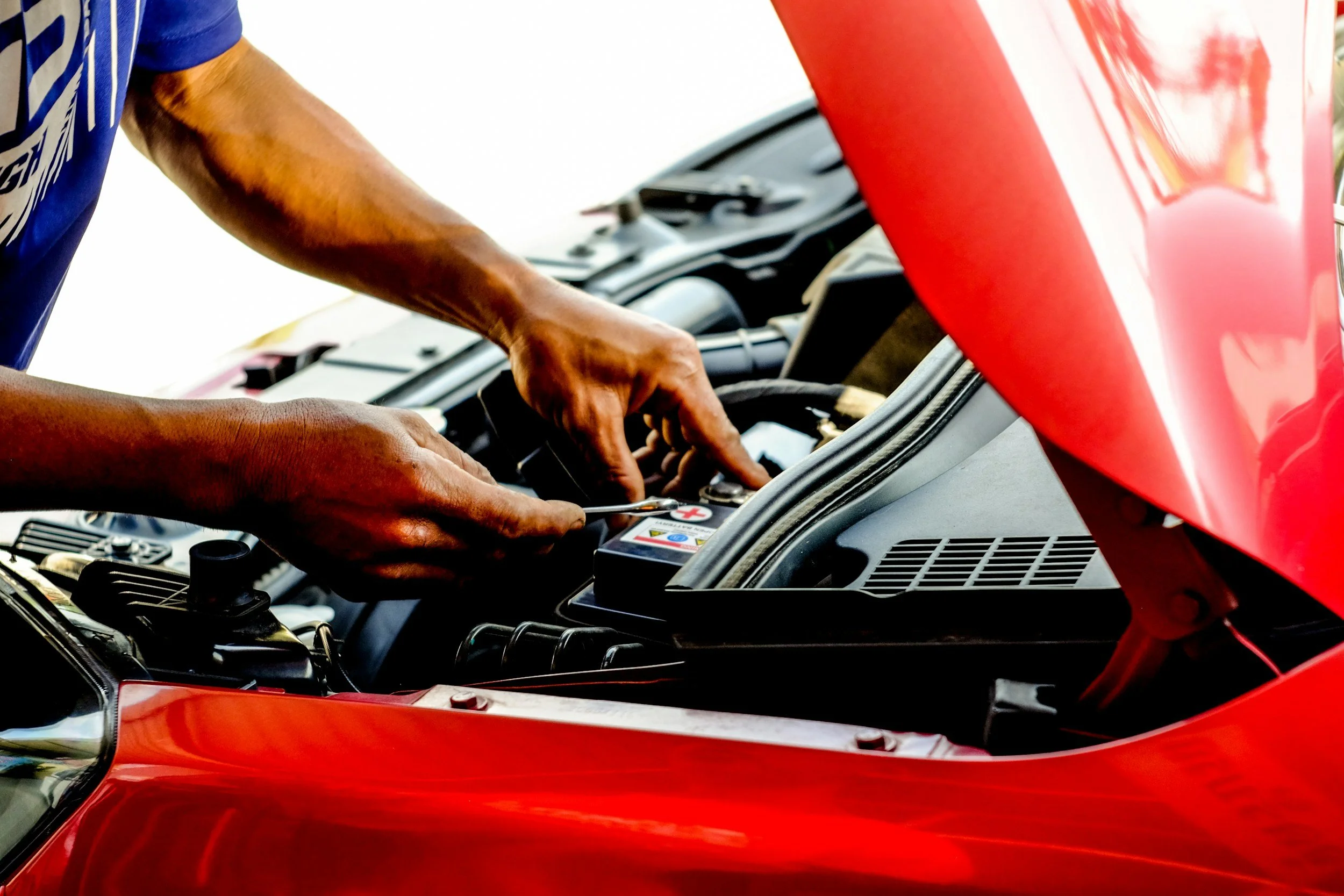
Battery and charging system. A load test, not a voltage glance. A battery loses a large share of its cranking capacity below minus twenty, so one that reads fine in September can be the one that fails in January. We give you the reading and tell you honestly whether it is good, marginal, or done — a marginal battery may well last another winter, and we would rather say so than sell you one you do not need yet. The alternator and the charging voltage are checked at the same time.
Block heater and cord. Whether it actually works, and whether the cord is cracked, frayed or chewed. Block heaters fail quietly, and the first anyone knows is a car that will not turn over at minus thirty-five despite being plugged in all night. [CONFIRM the test method the shop uses.]
Coolant strength. The freeze point tested, not the level eyeballed. Coolant that has been topped up with water over the summer can protect to minus fifteen or minus twenty — fine in Kelowna, and enough to crack a block in Edmonton. It should protect to minus forty or better here, which usually means a slightly stronger mix than the standard 50/50.
Tires. Tread depth and pressures on whatever is going on the vehicle for the winter. A winter tire is finished as a winter tire well before it is legally bald — once the tread is down to about 5 mm the snow and ice grip falls off sharply. If you are running all-seasons, we will tell you plainly what they can and cannot do once it is consistently below about seven degrees, and leave the decision to you.
Wipers and washer fluid. Winter-rated blades if the old ones are streaking, and washer fluid rated to at least minus forty. Summer fluid freezes in the lines and on the glass, and there is no worse moment to find that out than behind a gravel truck on the Henday.
Lights. Every exterior light, because from November to February most of your driving is in the dark, and a brake light you did not know was out matters more on an icy road.
Belts, hoses and fluids. Rubber goes brittle in the cold. A serpentine belt with cracks in it in October is a belt that snaps on a cold start in December. Hoses, clamps and every fluid level and condition are checked at the same time.
Heater, defrost and cabin airflow. That the heater blows hot, the defrost clears the windshield, and the cabin filter is not choked — you cannot drive what you cannot see through, and a weak defroster on a minus-thirty morning is a safety problem, not a comfort one.
Brakes. Pads and rotors measured. Stopping distances on ice are long enough without worn brakes adding to them.
Exhaust. A look for leaks and failed hangers. An exhaust leak matters more in winter than any other season, because winter is when people sit in a running car with the windows up waiting for it to warm.
Winter Tires Are a Separate Conversation — But the Same Visit
The winter checkup is about starting, seeing and stopping. Winter tires are about grip, and they are a decision of their own — which is why they have their own page, with the honest case for winters, all-weathers and all-seasons in this climate. What we would suggest is doing both in one visit. Changeover season in Edmonton compresses into about three weeks in late October and November and every shop in the city fills up at once, so a call in early October gets you the checkup and the swap before the first snowfall rather than a week after it.
New to Alberta? Read This
If you have just moved here — and a lot of people register a vehicle in September, right before the season turns — a few things will be new. A block heater, and the habit of plugging it in below about minus fifteen. Washer fluid that is rated for minus forty, not the blue stuff from the coast. The fact that all-season tires stop behaving like all-season tires once it is consistently below about seven degrees — plus seven, not minus — whatever the sidewall says. And that a battery which never missed a beat in Vancouver or Toronto has never been asked to do what a January morning here will ask of it.
None of that is a reason to worry. It is a reason to spend an hour in October finding out where the vehicle stands, which is what this checkup is for. If we did your out-of-province inspection, we already know the car — mention it when you book.
When to Book It
Late September to mid-October. The first snowfall is when everybody calls, and the week after it is when the shop is full and the battery that was going to fail has already failed. Booking early also means that if the checkup finds something — a battery, a belt, a set of tires — there is time to deal with it before you need it.
If it is already January and the car is struggling to start, call anyway. A battery test takes minutes, and the difference between a weak battery and a charging or starting problem is worth knowing before you buy either.
Common Questions
-
$59.95 at our shop, including the written report. Any repairs or replacements are quoted separately, and there is no obligation.
-
Yes — a load test, with the reading on your report. If it is marginal we will say marginal, not 'replace it'. A marginal battery often makes it through another winter if the vehicle is plugged in, and that is your call to make with the number in front of you.
-
Yes, both that it works and the condition of the cord.
-
A healthy engine with a healthy battery will start unplugged in most Edmonton weather, but below about minus fifteen a block heater is easier on the engine, the battery and the oil, and at minus thirty-five it can be the difference between starting and not.
-
No. The changeover is swapping the tires; the checkup is everything else the cold tests. Most people do both in one visit, and we would recommend it.
-
One rated to at least minus forty. The minus-thirty-five fluid is fine for most of the winter and not for the week you need it most, and the difference in price is a couple of dollars.
-
If the vehicle is older and has not been inspected in a year, possibly — the 100-point covers everything here and the rest of the vehicle besides. If you mainly want to know it will start and stop in January, this is the one. Call and we will tell you which makes more sense for the car and the budget.
Get Ready for an Alberta Winter
Call 780-468-3052 early October if you can, and tell us if your winter tires are going on at the same time.
2687-96 Street NW, south Edmonton, Monday to Friday 8:00am to 5:00pm.