
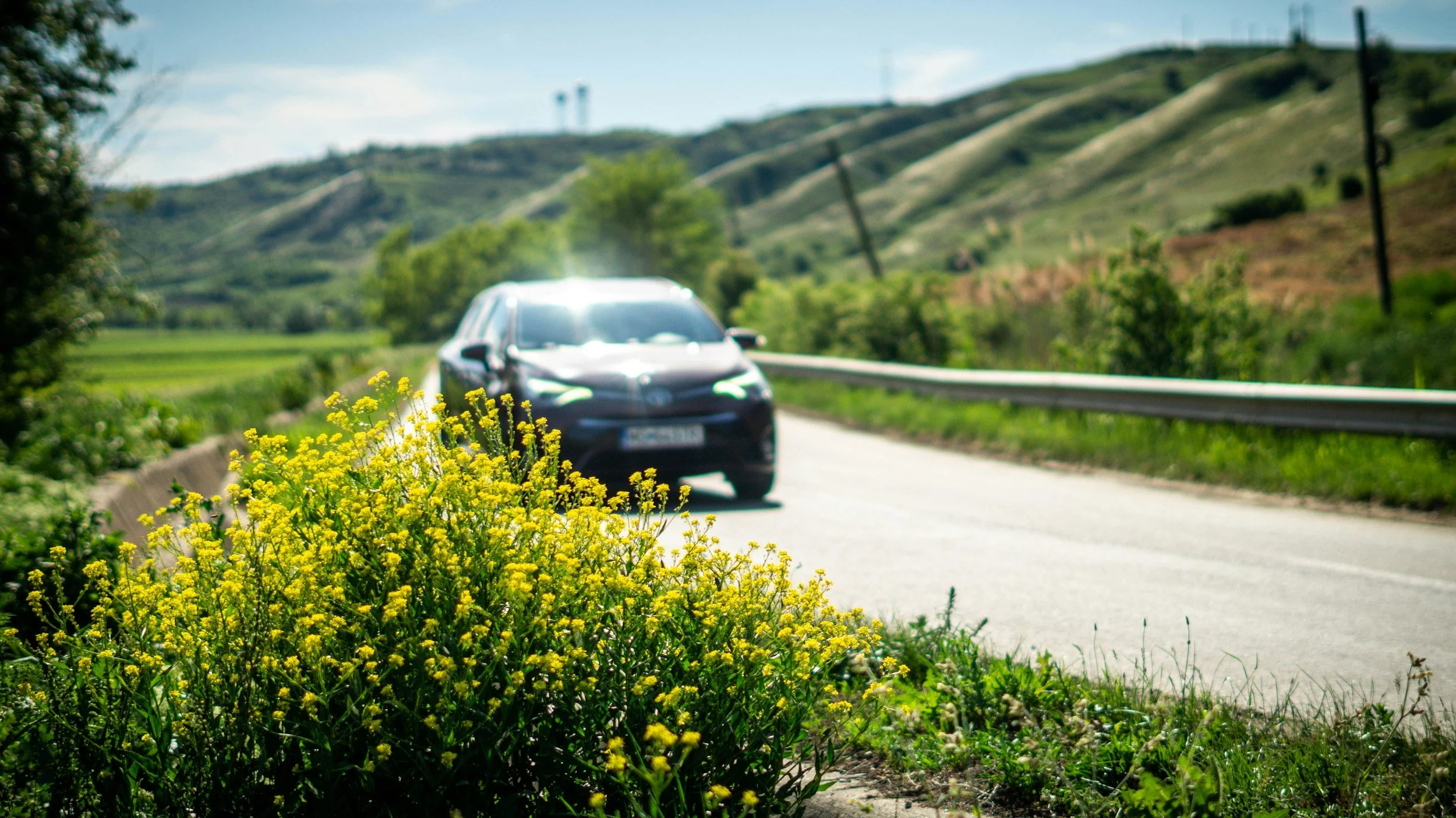
Get Ready for Summer.
A $59.95 summer checkup of the cooling system, tires, brakes and everything winter got to first.
Summer Checkup in Edmonton — Get Your Vehicle Ready for the Season
$59.95 for a seasonal checkup of the maintenance and safety items summer driving depends on — the cooling system, tires, brakes, and the parts an Edmonton winter has just spent five months attacking. You get a written report, straight advice, and the chance to fix the small things before they become a July breakdown.
Summer is easier on a vehicle than winter. The transition is not. Everything that road salt, minus thirty and the spring pothole crop did to your car is still there in May — it has just stopped showing up as hard starts and started showing up as a clunk over bumps, a pull to one side, or a temperature gauge that creeps up in traffic on the Henday in July.
Call 780-468-3052. If you are booking your winter tires off, tell us you want the summer checkup at the same time — the vehicle is already on the hoist.
What a Summer Checkup Covers
The list is built around two things: what heat and long summer drives ask of a vehicle, and what winter is likely to have damaged.
Cooling system. Coolant level and condition, hoses and clamps, visible leaks at the radiator and water pump, and the radiator itself — after a winter of salt spray and a spring of gravel, the fins are often packed with debris that stops it shedding heat. This is the summer failure: a cooling system that copes in April and boils over on the first thirty-degree day in a line of traffic.
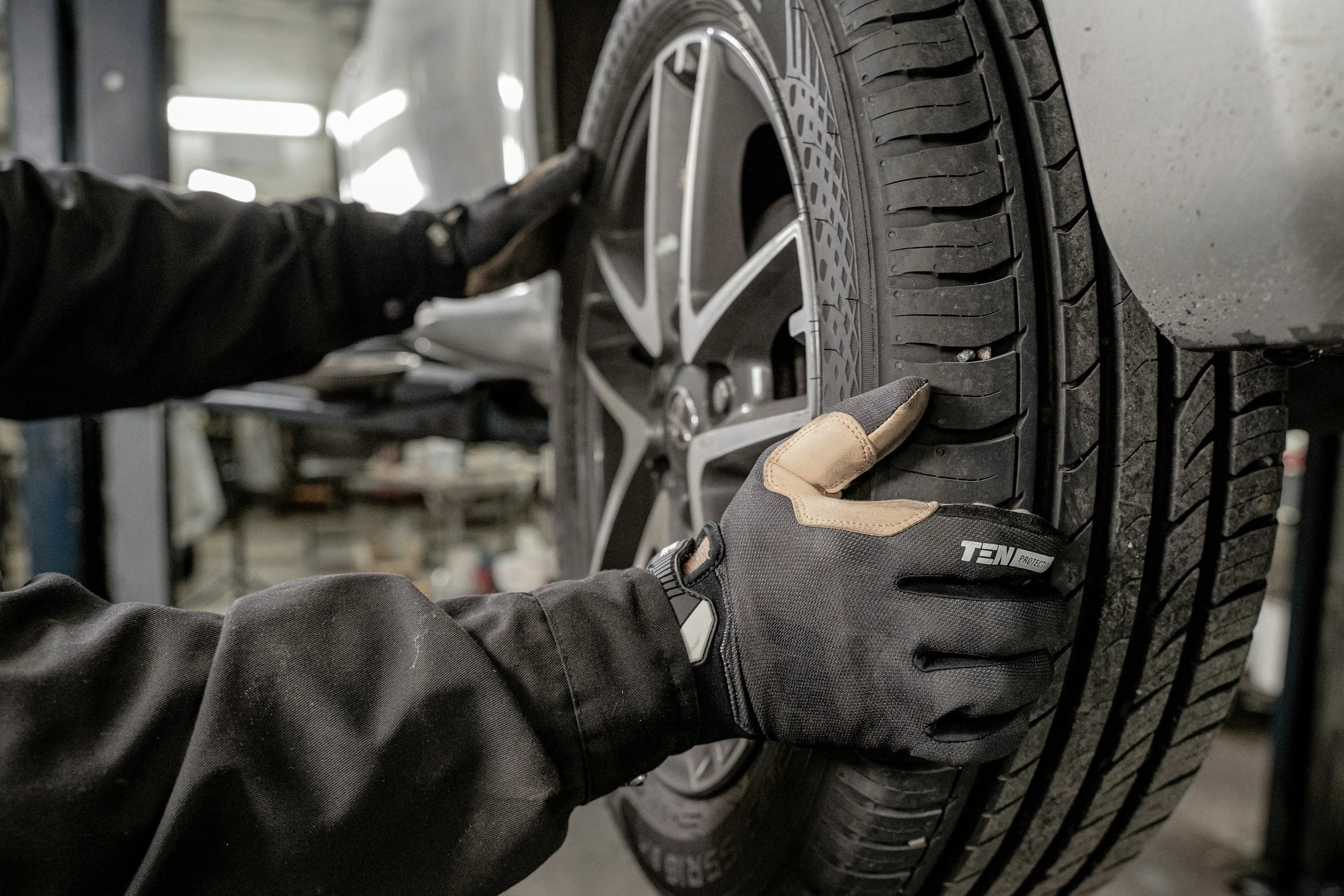
Tires. Tread depth and age on the summer set, pressures, and the wear pattern — a tire wearing on one shoulder after a winter of potholes is telling you the alignment has moved, and it is cheaper to fix that now than to buy the tire again in August.
Steering and suspension. This is where the pothole season shows up. Play in tie rod ends and ball joints, bent or leaking struts, a control arm that took a hit on Whitemud in March. The symptom is usually a clunk, a wander, or a steering wheel that no longer sits straight.
Brakes. Pads and rotors measured, and the caliper slides checked — road salt seizes them over a winter, and a seized slide wears one pad to nothing while the other looks fine. It is the most common brake problem we see in spring, and it is invisible from the driver's seat until the grinding starts.
Battery and charging. Cold reveals a weak battery; heat is what actually shortens its life. A load test now tells you whether the battery that struggled in January will see another winter, while there is still time to plan for it.
Belts, hoses and fluids. Serpentine belt condition, coolant and heater hoses, and every fluid checked for level and condition — including brake fluid, which absorbs moisture over a winter and matters more when the brakes are working hard in heat.
Wipers, washer and lights. Winter wiper blades are usually finished by April. Fresh blades, washer fluid, and every exterior light checked — summer thunderstorms on the highway are the driving condition that finds a bad wiper.
Underneath. A look at the exhaust, hangers, lines and underbody for the salt corrosion and impact damage that winter leaves behind, so that anything that will need attention this year goes on the report rather than on the side of the road.
What Winter Did While You Were Not Looking
Road salt does not stop working when the snow melts. It sits in the seams and on the fasteners and keeps corroding through the summer, which is why a caliper that was fine in November can be seized by May and why brake lines and exhaust hangers on an Edmonton vehicle fail years before they would in Kelowna.
Potholes do their damage all at once. One good hit at 60 km/h can bend a tie rod, knock the alignment out, or dent a rim so it leaks slowly. The vehicle usually keeps driving, and the only evidence is a wear pattern on the tire three months later. The summer checkup is the moment to catch it, because the tire is coming off anyway.
And five months of cold starts, short trips and idling in the driveway is hard on the engine's fluids and its belts. None of that is dramatic. It is just wear, arriving earlier than the maintenance schedule expects it to.
When to Book It
With the spring tire changeover, in April or early May, is the efficient answer. The vehicle is on the hoist, the wheels are off, and half the checkup is already in front of us. If you keep your winters on rims and swap them yourself, book the checkup on its own any time from April on — the point is to have it done before the first long drive of the summer, not on a particular date.
Common Questions
-
$59.95 at our shop, including the written report. Any repairs are quoted separately, and there is no obligation.
-
No. The 50-point looks at overall condition across the whole vehicle. The summer checkup is narrower and seasonal — it spends its time on the cooling system, the tires, the brakes and the pothole damage. If you want the full picture, book one of the inspection packages instead; if you want the car ready for summer, this is the one.
-
Yes, and it is the best time to do it. Tell us when you book the swap.
-
A repair — or more precisely, a diagnosis. A gauge that climbs is a symptom, and chasing one symptom to its cause is a different job from a seasonal survey. Do not keep driving an engine that is overheating; call and we will look at it as a diagnostic.
-
It depends what the winter did. The two look at different things: the winter checkup is about starting and stopping in the cold; this one is about heat, and about pothole and salt damage that did not exist in October. If you have hit potholes hard this spring or the steering feels different, yes. If not, and the vehicle is due an oil change, the check that comes with it may be enough — we will tell you which.
-
Get Ready for Summer
Call 780-468-3052 and if you are swapping your winter tires off, say so and we will do both in one visit.
2687 96 Street NW, south Edmonton, Monday to Friday 8:00am to 5:00pm.